

So, only four more sleeps … Biology Week is fast approaching, and the finale for participants of the Royal Society of Biology-funded National Spelling Bee for 2025 is upon us!
At a first glance at the competition words the pupils needed to learn, it seemed nothing had changed from last year — until my eyes landed on Endozoochory.
That’s ENDOZOOCHORY.
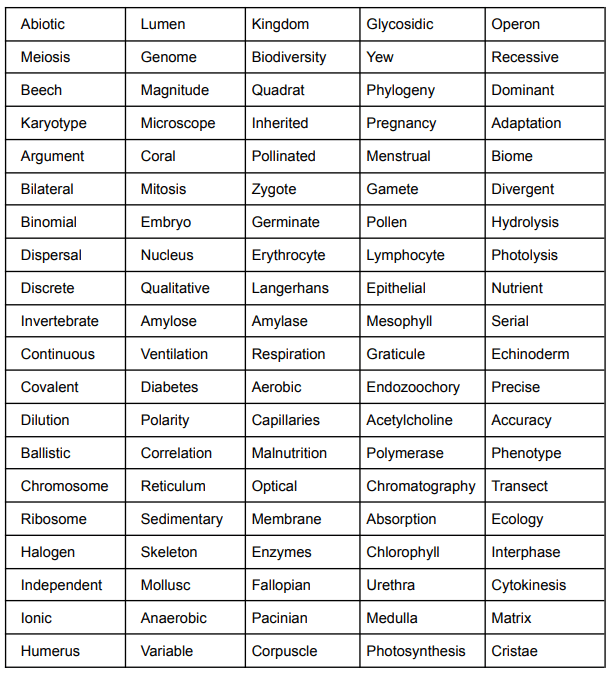
Decoding it, I recognised endo meant inside, zoo clearly meant animals, but the last portion of the word stumped me. A quick search later, and I discovered it means the dispersal of seeds through animals — when seeds travel inside an animal before being deposited elsewhere. Nature’s delivery system in a single word!
But this got me thinking — spelling itself seems to be becoming a dying art. Exam boards now often accept words as long as they’re phonetically correct. On one hand, that’s inclusive and practical; it recognises how people say the word rather than penalising them for memorising every letter. On the other hand, something is lost. In biology, spelling carries meaning. There’s a significant difference between amylase and amylose, glycogen and glucagon. One letter can flip a concept entirely. Thankfully, exam boards are stricter with these scientific terms, preserving the precision that science demands.

I also like to bring this precision into the classroom in a hands-on way using LEGO® Serious Play®. Earlier this week, my Year Eight pupils tackled some of the hundred words from the Biology Spelling Bee. Each brick became a metaphor for part of a word, allowing them to dual code — linking spelling with meaning.
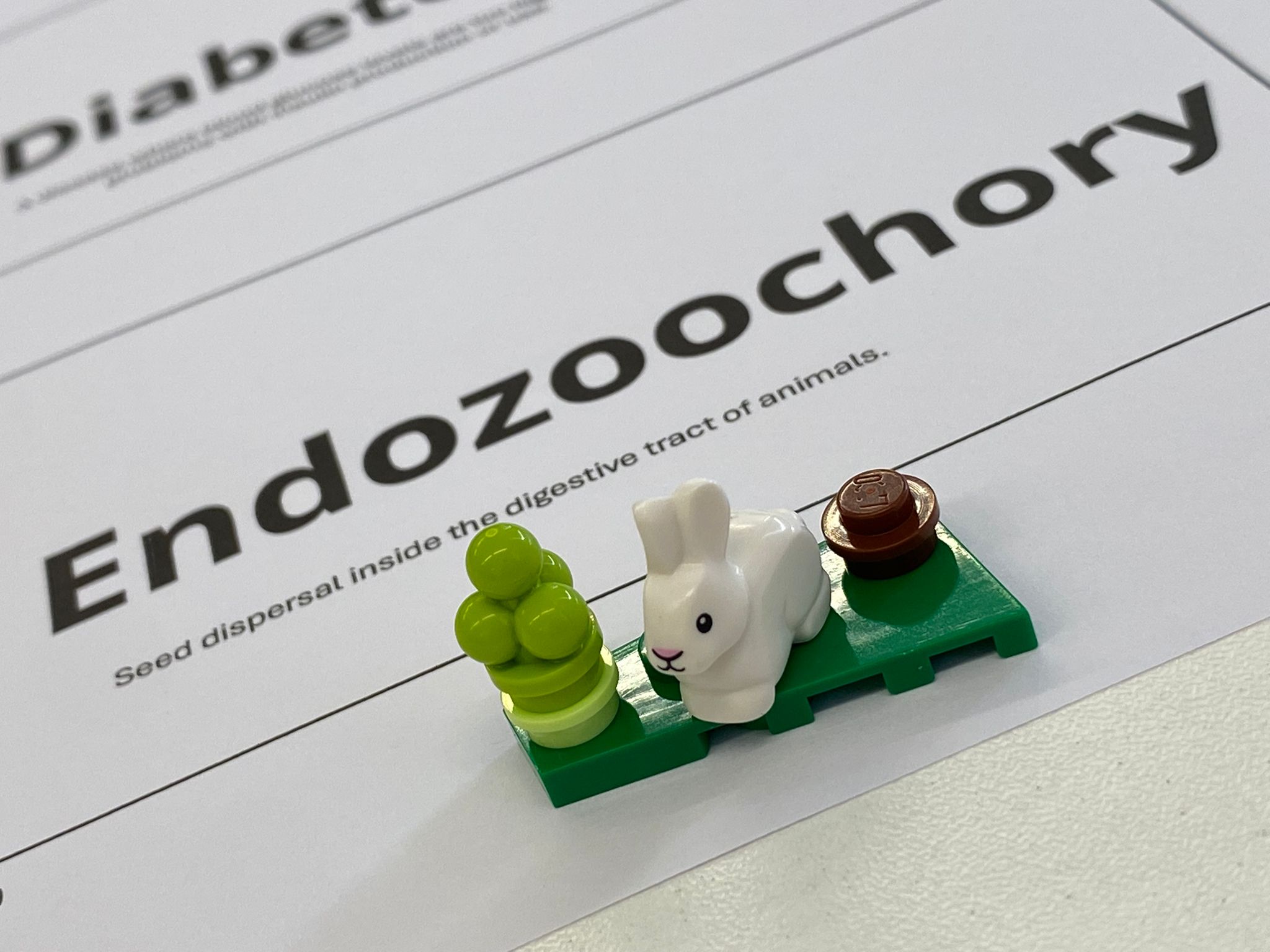
Take Endozoochory, for instance: a green brick shaped like a bowl of fruit, a rabbit minifig, and a tiny “poo” brick perfectly represented seeds dispersed by animals. Suddenly, a long, intimidating word became a playful, memorable story built with their hands — and lots of laughter.
Outside the classroom, language play continues online. Every Sunday, the publishers of the Say Word game release a fresh challenge. A card shows a word stem or ending, and players try to come up with as many words as possible. My goal? See how many biological words I can find while tagging friends to share the fun. This week’s FRU / FUN prompt led to fruticose (a type of lichen) and functional (thinking of proteins). A few other biologists join in each week, making it a weekly mini biology revision session disguised as a game.
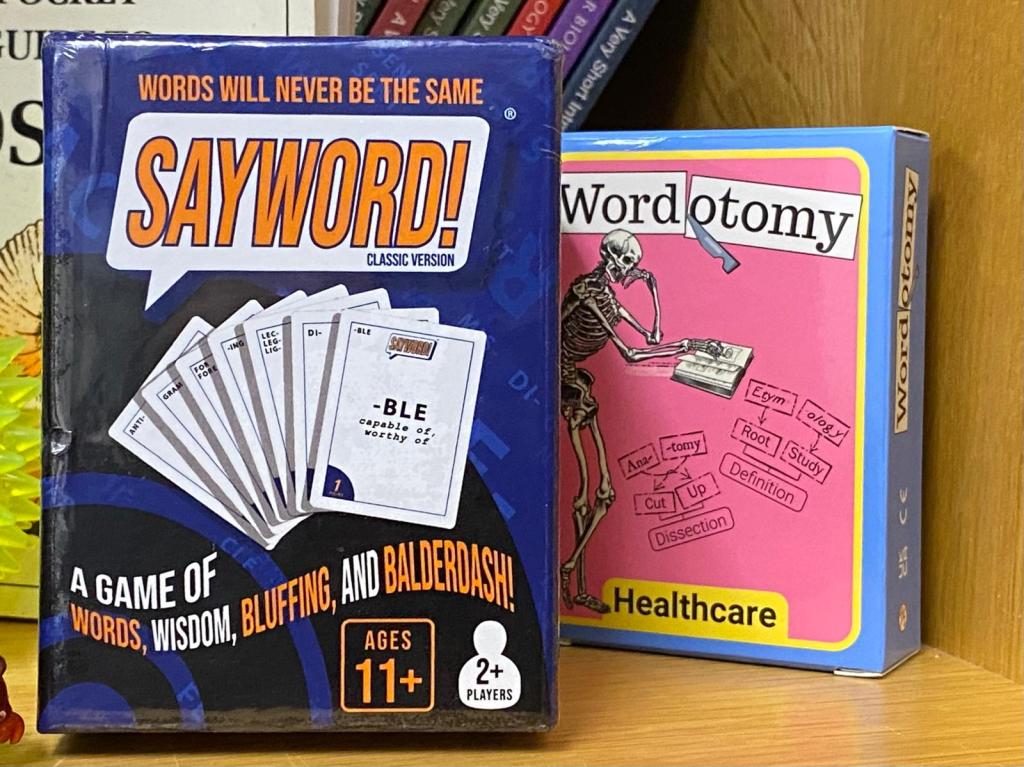


Then there’s WORDOTOMY, a clever card game created by Siobhan Moyes and John Chilton at the University of Plymouth. Each card shows a root on one side, with its meaning and examples on the other. Play solo or with friends, and suddenly complex anatomical terms become fun challenges to decode rather than memorise. Games like this remind us that understanding the building blocks of words is often more powerful than rote learning.
I also love using haiku to encourage concise thinking and creativity. This week, I challenged another year group to write a haiku for each word of the Biology Spelling Bee, using the hashtag #BiologicalHaiku. It’s a fantastic way to make the meaning stick — students condense complex scientific terms into tiny, memorable poems. The results are online for everyone to enjoy!
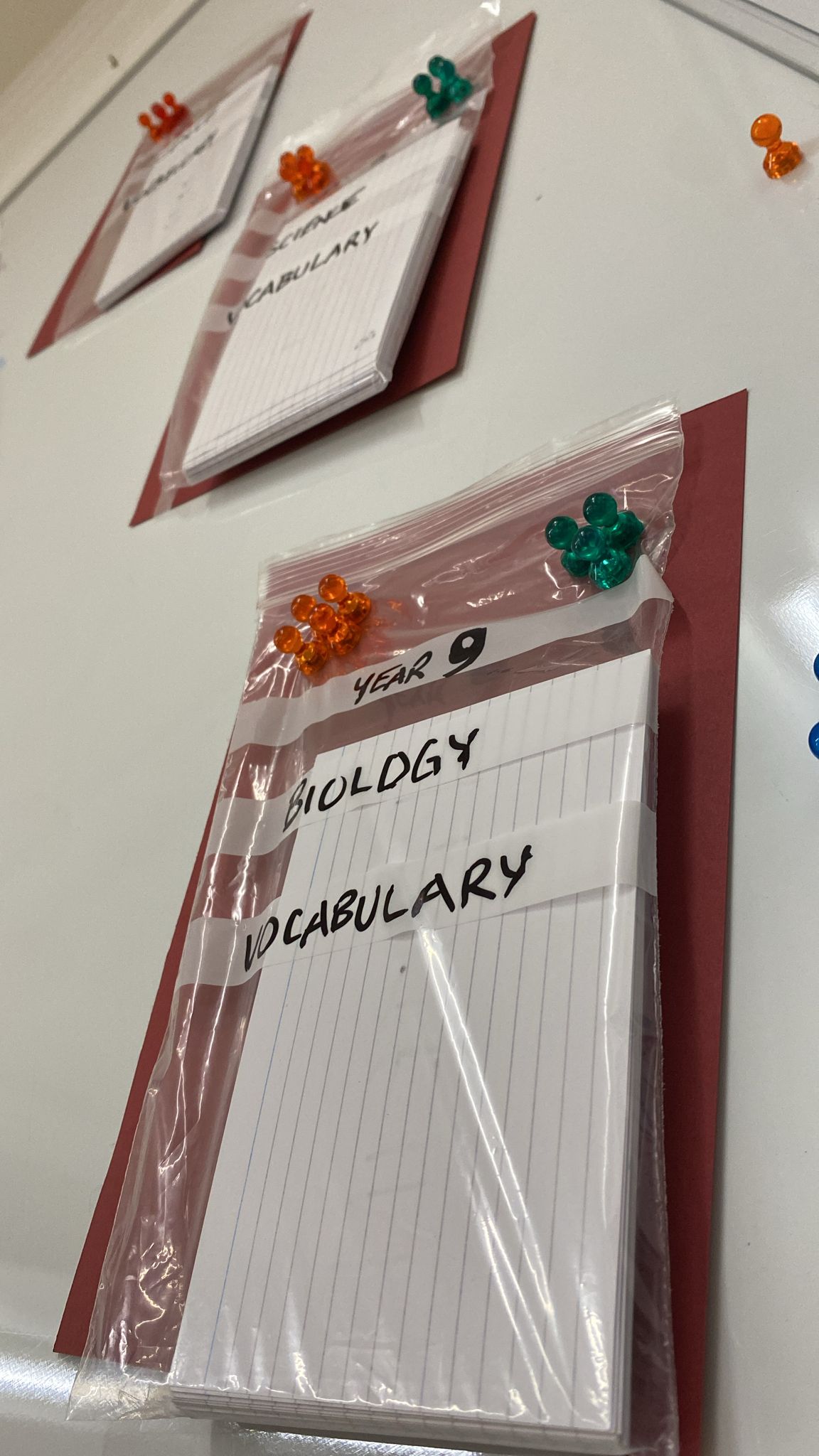
All of this connects to the insights of Suzie Dent, whose work on etymology and playful language reminds us that words tell stories. When students decode a word — LEGO® bricks, cards, social media challenges, or haiku — spelling stops being scary, and meaning becomes memorable.
So this Biology Week, perhaps take a moment to explore the words you use to describe life. Break them into their pieces, play with them, and see what stories they tell. Vocabulary doesn’t have to be dry — it can be a playground of discovery!
 Chat Biology